.jpeg)
How Does Professional Carpet Cleaning Work?

A carpet can look only slightly tired on the surface and still be holding far more dust, grit and odours than most people realise. That is usually the point where homeowners start asking, how does professional carpet cleaning work, and is it really different from hiring a machine and doing it themselves? The short answer is yes. A proper professional clean goes beyond surface shampooing and aims to lift out embedded soil, treat stains properly and leave the whole room feeling fresher.
For most homes, the difference comes down to three things: stronger equipment, better stain knowledge and a process designed to clean deeply without leaving carpets soaked for days. If you have children, pets or busy walkways that never seem to stay clean for long, that deeper clean can make a noticeable difference to both appearance and hygiene.
How does professional carpet cleaning work in practice?
Professional carpet cleaning usually starts with an inspection, not with water. The cleaner checks the carpet fibre, the condition, any problem areas and the types of stains present. This matters because not every carpet should be treated in exactly the same way. Wool, synthetic blends and delicate fibres can all respond differently to heat, moisture and cleaning products.
Once that assessment is done, the carpet is thoroughly vacuumed. This stage is easy to overlook, but it is important. Dry soil, dust and grit need to be removed before wet cleaning begins, otherwise they can turn into muddy residue during the main clean. In homes with pets or heavy foot traffic, there is often far more dry debris in the pile than expected.
After vacuuming, any spots or stains are treated individually. A food spill, muddy paw marks, tea, cosmetics and pet accidents do not all behave the same way, so a good cleaner will use the right treatment rather than one product for everything. This is one of the biggest differences between a professional service and a quick DIY approach. Treating the stain properly improves the result and reduces the risk of setting it deeper into the carpet.
The next step is usually pre-spray or pre-treatment across the carpet. This loosens built-up dirt and oils that cling to fibres over time. In many homes, especially living rooms, stairs and hallways, the carpet is not dirty because of one dramatic spill. It is dirty because of a steady build-up of daily use. Shoes, pet hair, airborne dust, crumbs and skin oils all settle in gradually.
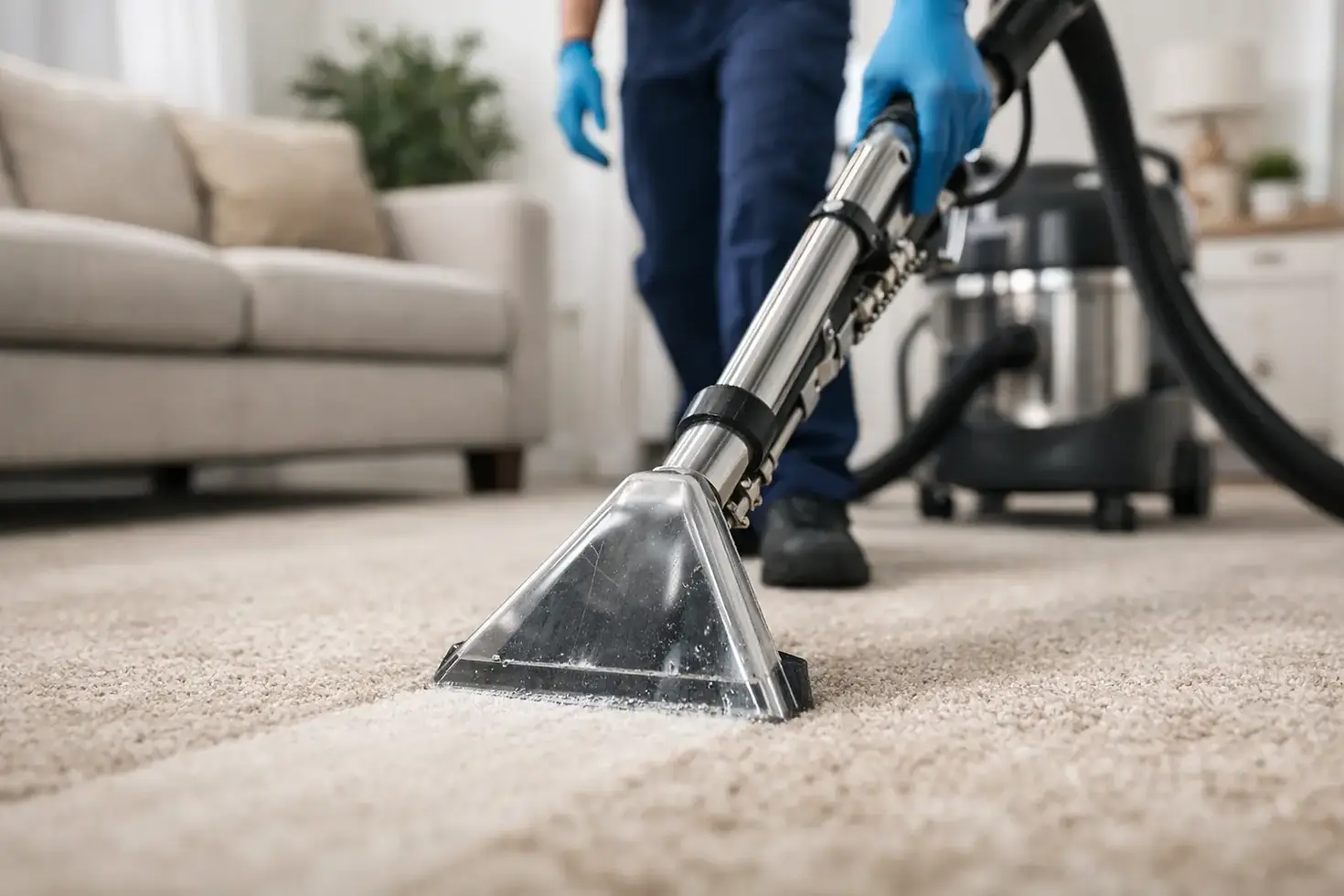
Then comes the main extraction clean. In many cases, this is hot water extraction, often called steam cleaning, although it does not rely on steam alone. Warm water and cleaning solution are worked into the carpet and then extracted powerfully back out, taking loosened dirt with them. Done properly, this rinses the carpet rather than simply brushing product in and leaving residue behind.
The most common method: hot water extraction
If you are wondering how does professional carpet cleaning work when people mention steam cleaning, this is usually what they mean. Hot water extraction is widely used because it gives a deep clean and suits many domestic carpets. The machine sprays cleaning solution into the fibres and immediately vacuums it back out with strong suction.
The benefit of this method is that it reaches below the top layer of the pile. That helps remove trapped dirt, allergens and odours that ordinary vacuuming cannot fully tackle. It is particularly useful in family homes where carpets take daily wear and where freshness matters just as much as appearance.
That said, results depend on how it is carried out. Too much water, weak suction or the wrong products can leave carpets overly wet or sticky. A trained professional aims to leave the carpet clean, rinsed and only damp, not saturated. That is one reason professional equipment tends to outperform hire machines.
Why professional results usually look better than DIY
Many people try a rental machine first, especially if a stain has become annoying or the carpet has lost its colour. Sometimes that can help a little, but it often struggles with deeper grime. Hire machines are designed for general use, which means they are usually less powerful and less precise than commercial equipment.
The other issue is product choice. It is easy to use too much detergent, scrub too hard or pick a treatment that is not right for the stain. When too much product is left behind, carpets can attract dirt again quite quickly. That is why a carpet may look cleaner for a short time after DIY cleaning, then become dull again sooner than expected.
Professional cleaning is also more controlled. The cleaner can adjust the method to suit the carpet, focus on high-traffic areas and use targeted stain treatments where needed. For homeowners, that usually means better results with less guesswork and less disruption.
What happens to stains and pet odours?
This is often the biggest concern, especially in households with children or animals. A professional cleaner will usually pre-treat stains before the full clean begins, then assess whether they are likely to lift fully, partially or not at all. Honest advice matters here because some stains permanently alter carpet fibres or dye. Bleach damage, old red wine marks and certain pet accidents can be stubborn even with the right treatment.
Pet odours can also be more complicated than they seem. If an accident has soaked into the underlay, surface cleaning alone may not remove the smell completely. In those cases, a professional may improve the carpet significantly but still explain that deeper treatment or replacement of the affected section could be needed. That kind of clarity is far more useful than promising miracles.
When the odour is sitting mainly in the carpet fibres, though, a proper deep clean can make a real difference. It removes built-up residue, helps neutralise smells and leaves the room feeling much fresher.
Are the products safe for children and pets?
For most households, this is a perfectly sensible question. Reputable professional cleaners use products that are designed for domestic environments and, when used correctly, are safe once the carpet has dried. Many local companies also choose eco-friendly solutions because homeowners want strong results without harsh chemical smells.
That does not mean every carpet is treated with exactly the same product. Safety and effectiveness both depend on using the right solution in the right amount. A family-run service with experience in homes rather than only commercial sites will usually understand that customers want carpets cleaned properly without making the house feel unpleasant afterwards.
How long does it take to dry?
Drying times vary, and this is one of those areas where the honest answer is it depends. The carpet type, room temperature, airflow and how heavily soiled the carpet was all play a part. In many homes, carpets are dry within a few hours, though some thicker carpets can take longer.
Good ventilation helps. Opening windows slightly, using heating sensibly and keeping air moving through the room can speed things up. Most professional cleaners aim to leave carpets damp rather than wet, so you are not waiting all day and night before the room is usable again.
It is usually best to avoid heavy foot traffic until the carpet is fully dry. If you do need to walk across it, clean socks are better than outdoor shoes.
When is professional carpet cleaning worth it?
For some households, once a year is enough. For others, especially homes with pets, children or a lot of traffic through hallways and living spaces, more frequent cleaning can be worthwhile. The right timing depends on how the carpet is used, not just how old it is.
Professional cleaning is often worth booking when the carpet looks dull, smells less fresh than it should, or has marks that ordinary cleaning cannot shift. It can also be helpful before guests stay, after decorating work, when moving in or out, or simply when the home no longer feels as fresh as you want it to.
In areas such as Caterham and the surrounding towns, many homeowners choose a local cleaner because they want a reliable service, sensible pricing and someone who understands that the job is not just about the carpet itself. It is about making the home feel cleaner, healthier and more comfortable without fuss.
What should you expect from a good service?
A good professional carpet clean should feel straightforward from the start. You should get clear communication, realistic advice about stains, transparent pricing and a tidy, careful service in your home. If a room is heavily stained, you should be told what is achievable rather than given false hope.
You should also notice more than just a visual difference. Carpets should feel fresher underfoot, rooms should smell cleaner and the whole space should seem better cared for. That is often why people book again. It is not only about removing visible dirt. It is about restoring comfort in the parts of the home you use every day.
At its best, professional carpet cleaning is a practical way to give a room a proper reset. If your carpet has lost its freshness, holds onto odours or simply never looks clean for long, a thorough professional clean can make the room feel right again.


Comments