.jpeg)
How to Clean Carpet Edges Properly
- jkw336602
- 4 hours ago
- 6 min read

That dark line around the edge of the room can make an otherwise clean carpet look tired. If you have been wondering how to clean carpet edges, the short answer is that they need a gentler, more targeted approach than the middle of the carpet, especially around skirting boards, doorways and under radiators.
Carpet edges collect dust differently. Air movement pushes fine soil towards the perimeter, and over time it settles into the fibres where your vacuum does not always reach properly. Add pet hair, everyday dust and a bit of household traffic, and those edges can start to look grey or even black. The good news is that light build-up can often be improved at home, as long as you clean carefully and do not soak the carpet.
Why carpet edges get dirty so quickly
The edges of a carpet are a magnet for dry soil. This is often called filtration soiling, which sounds technical but is really just dust being pulled through gaps around the room. As air moves under doors, around skirting boards and from one room to another, tiny particles settle where the carpet meets the wall.
That is why the edges can look darker even when you vacuum regularly. Standard vacuum heads are designed for open carpeted areas, not tight borders. Furniture can make matters worse too. If a wardrobe, bed or sofa sits close to the wall, dust can sit undisturbed for months.
In homes with pets or children, the build-up can happen even faster. Hair, skin flakes, outdoor dirt and everyday crumbs all find their way into the edges. Kitchens and hallways nearby can increase the problem, especially if people walk through in shoes.
How to clean carpet edges without damaging them
If you want to know how to clean carpet edges properly, start dry before you add any moisture. That alone makes a big difference.
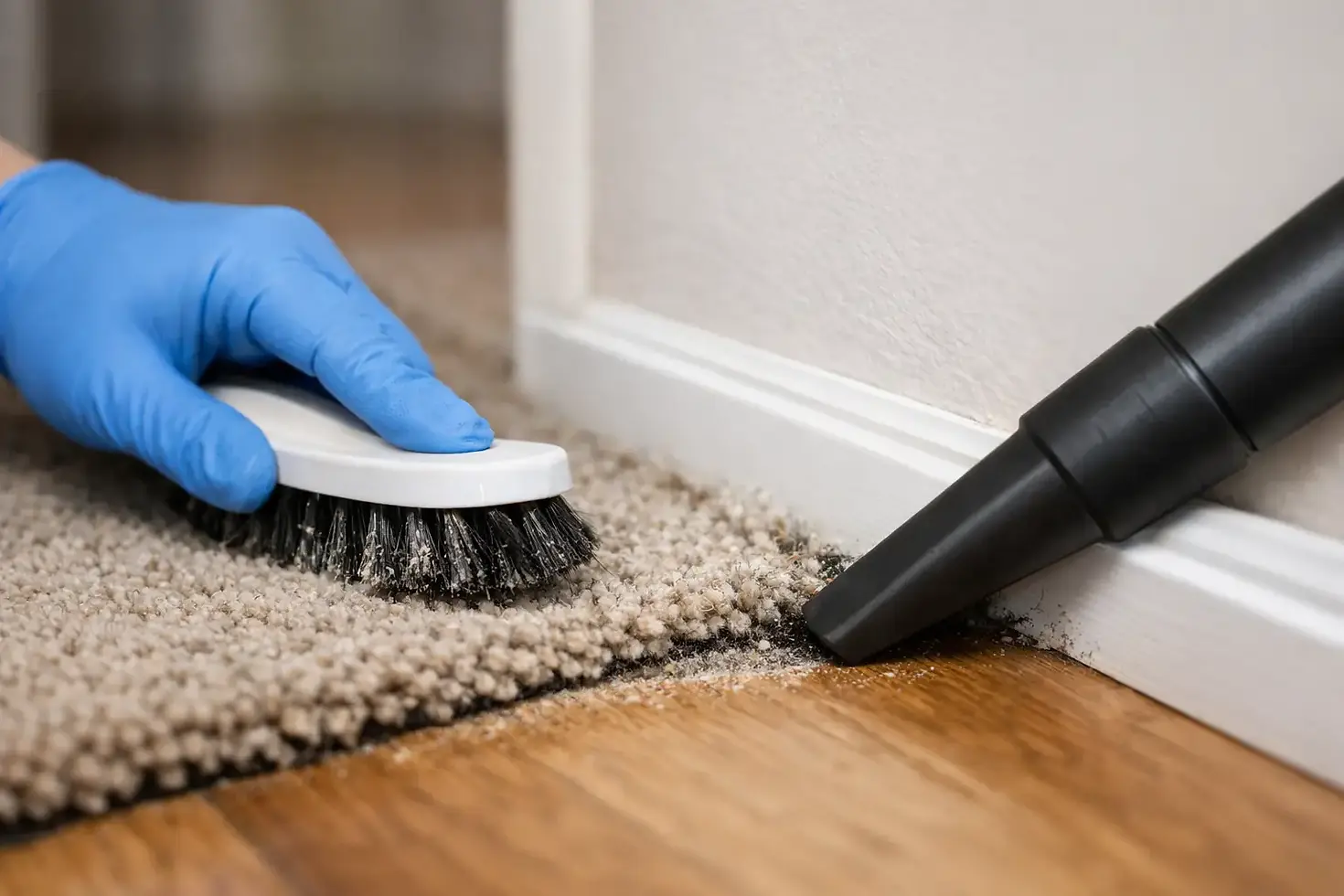
Begin by moving any light furniture away from the edge of the room. Then use your vacuum cleaner hose with a crevice tool or edge attachment. Work slowly along the skirting board rather than rushing. One careful pass often lifts more dirt than several quick ones.
If the edge still looks dull, use a soft brush to loosen trapped dust. A clean detailing brush or soft upholstery brush works well. Brush towards the centre of the carpet, not into the wall, so you lift dirt out rather than pushing it deeper.
Only after that should you use a cleaning solution, and even then, less is more. Dampen a clean white cloth with a mild carpet-safe solution and blot the darkened edge gently. Do not scrub hard. Aggressive rubbing can rough up the fibres and make the area look worse once dry.
It is worth testing any product in a hidden corner first. Some carpets are more colour-sensitive than others, and wool in particular needs a careful hand.
A simple step-by-step method that works at home
For most households, a practical routine is enough to freshen the edges without turning it into a full day’s job.
First, vacuum the edge thoroughly with the crevice tool. Go over each section slowly, especially near door frames and radiator pipes. Next, loosen what remains with a soft brush. After that, lightly blot with a barely damp cloth and a suitable carpet cleaner.
If there is a visible dark line, repeat the blotting rather than soaking the area. Too much water can cause shrinkage, lingering damp smells or tide marks. Once you have cleaned the edge, pat it dry with a towel and allow plenty of airflow in the room.
If you have a small handheld carpet machine, use it sparingly. Carpet edges dry more slowly than open areas, and over-wetting can sometimes cause the dirt in the backing to wick back up as it dries.
What to avoid when cleaning carpet edges
The biggest mistake is using too much water. People often assume that if a stain or dark line remains, it needs more product and more scrubbing. Usually the opposite is true.
Avoid bleach, strong supermarket sprays and washing-up liquid. These can leave sticky residues that attract more dirt, or they may affect the carpet backing and colour. A stiff scrubbing brush is another common problem. It can fray the edge and leave the carpet looking fuzzy.
Be careful around wooden skirting boards as well. Over-wetting the carpet near the wall can affect painted surfaces or cause moisture to sit where it should not. If you are cleaning near sockets, keep cloths damp rather than wet and work with care.
There is also a point where home cleaning will not fully shift the mark. Filtration lines can bond quite firmly to carpet fibres, particularly if they have been building up for years. In those cases, DIY cleaning may improve the look without removing it completely.
When dark carpet edges need professional help
Some carpet edge marks are not just surface dirt. If the dark border has been there a long time, it may be deeply embedded filtration soiling. That usually needs professional treatment with the right equipment, cleaning agents and extraction methods.
This is especially true if the carpet is light coloured, made from wool, or already showing signs of wear. Trying repeated DIY treatments can sometimes spread the mark or leave the edge patchy. Professional cleaning can lift far more dry soil from deep within the fibres and treat the area without the heavy soaking that causes other problems.
For busy family homes, this can save a lot of frustration. If you have already vacuumed, brushed and spot cleaned with little change, it is often more cost-effective to have the carpet cleaned properly rather than keep buying products that do not solve the issue.
How to keep carpet edges cleaner for longer
Once the edges are looking better, the aim is to slow the build-up. A little regular attention helps much more than occasional heavy cleaning.
Vacuum the edges separately every week or two instead of relying only on the main floorhead. This is one of the easiest habits to keep, and it takes just a few extra minutes. Pay attention to bedrooms where beds sit close to the wall, and lounges where sofas block access.
Improving airflow and reducing dust also helps. If possible, clean behind furniture more often and wipe skirting boards so loose dust does not drop straight back into the carpet. In pet-owning households, brushing pets regularly and keeping entrances cleaner can reduce what gets tracked indoors.
Door mats are worth having, particularly near busy entrances. They will not stop filtration lines by the skirting boards, but they do cut down general dirt across the whole carpet. That means less soil available to settle around the perimeter in the first place.
The difference between edge dirt and carpet stains
It is easy to mistake dirty carpet edges for staining, but they are not always the same thing. A drink spill near the edge of a room tends to be localised and may have a defined shape. Filtration soiling usually follows the perimeter in a narrow, continuous line.
That matters because the treatment is different. Spills often respond to prompt blotting and spot cleaning. Edge build-up needs careful dry soil removal first, followed by light treatment of what remains. If you treat filtration lines like a normal spill and soak them straight away, you can make the result look patchier.
Is it worth cleaning carpet edges yourself?
In many cases, yes. If the edges are dusty, lightly greyed or simply overdue for attention, home cleaning can make a visible difference. It is affordable, quick and well worth trying before the room starts to look generally neglected.
But it does depend on the condition of the carpet. If the edges are very dark, the carpet is delicate, or the area has already been scrubbed in the past, a careful professional clean may be the better route. That is often the case in family homes where carpets take a lot of daily wear and need more than surface freshening.
For households in and around Caterham, this is a common issue in bedrooms, hallways and living rooms where dust settles quietly over time. A proper clean can brighten the whole room, not just the visible border.
Clean carpet edges are one of those small details that change how a room feels. When the perimeter looks fresh again, the whole carpet looks better cared for, and the room feels cleaner underfoot. If your usual vacuuming is no longer enough, a gentle targeted clean is a good place to start.



Comments